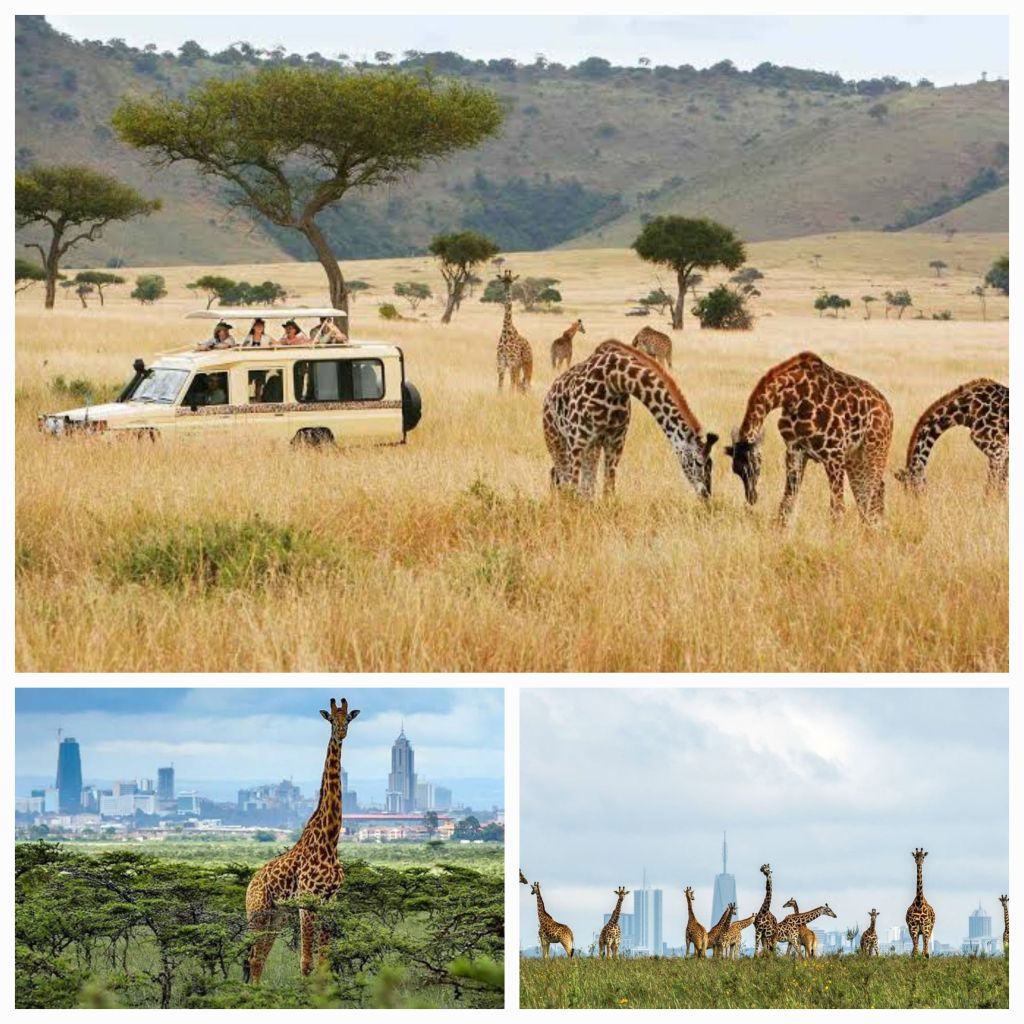
I have been tagged by some of you seeking my views about the planned hike of park fees by Masai Mara ( Narok county ) and also KWS parks.
Covid pandemic brought Kenya’s tourism to its knees just like any other destination and we have been busy rebuilding since 2021. It had been predicted that we shall hit pre-covid numbers in 2024 but it looks like we may achieve that this year mainly driven by what has been dubbed ” Revenge Travel “
On matters park fees , firstly let’s agree on one thing conservation is NOT cheap , it’s expensive affair and park fees alone will never be enough. I must also single out Narok county for launching the much awaited Mara Management Plan which is a solid document . Well done to Governor Ntuntu for finally making it happen and as tourism industry we are fully in support. On the other hand both Narok County and KWS cannot ignore our competing destination when it comes to safaris .
Just the way we have G7 I have also come up with my own Big 7 Safari destinations.
- Kenya 🇰🇪
- Tanzania 🇹🇿
- South Africa 🇿🇦
- Zimbabwe 🇿🇼
- Botswana 🇧🇼
- Zambia 🇿🇲
- Namibia 🇳🇦
Kenya is predominantly a beach safari destination which is God given. Out of the Big 7 only 4 countries are able to offer both beach and safari since the other three are landlocked.
We are happy that both Mara and KWS are now giving us an opportunity for both peak and green ( low season) which is something we have lobbied as tourism industry for a long time .
Let me also make it very clear that we are NOT against park fees increase but doubling park fees for the Mara from $100 to $200 will certainly outprice ourselves. KWS planned jump for Nairobi National Park, Lake Nakuru and Amboseli to $100 is equally on the higher side. Even Tsavo is meant to jump to $100 initially the said $80 from $52.
The triple hike for Kenyans and domestic market will equally shock the system and undermine the Tembea Kenya campaign that has taken us a long time to build.
Looking at competing safari destinations, highest will be TZ who are in the $100 a day mark while SA. Zim , Zambia all hover between $20 to $35 a day. If it is migration please keep in mind that we share that experience with Serengeti hence we should be very careful how and when we choose to hike our rates.
What is the risk of exorbitant park fees?
✅️1. At $200 a night July to January it means a couple will be expected to pay $400 a day . The new rule of 12 hours is not helping matters either since all competing destination offer the traditional 24 hours. It simply means that visitors to Mara will be paying to access the park will be comparable or even higher to what they will be paying to stay at some of the camps and lodges.
✅️2. New rates require ample notice in the international market. Anything less than 18 months notice is always a problem, consumers laws in most sources market do not allow price changed once a package has been bought and paid for. It means a local operator will have to top up and most of the tour operators operate on margin and very small margins for that matter.
✅️3. Kenya is a midscale destination, we are NOT a mass market and we don’t want to be a mass market destination neither are we niche destination. We do attract a small bracket of high end visitors but trust me those numbers are not enough to sustain our tourism industry.
✅️4. On numerous occasions I have heard policy makers justify any planned park fees increase by comparing us with Rwanda’s Gorilla permits that currently stand at $1500. At one point it was $350 then jumped to $750 finally they doubled to $1500. What these policy makers won’t tell you is that By law, only 8 tourists can visit each habituated gorilla family per day, meaning that only 152 permits are available daily in Uganda and 96 in Rwanda . For a long time Rwanda capped the permits at 56. Availability is limited if anything I can equate the gorilla permits to limited edition of a designer bespoke item since supply is limited and cannot be stretched.
If we go ahead and double our park fees or even 50% hike it means that as operators in Kenya we will be disadvantaged.
Many of our confirmed bookings will happily switch to other G7 safari destinations. What does this mean to our economy?
✅️A. Less numbers visiting Kenya which means reduced visa fees fees and airport tax and by extension reduced forex.
✅️B. Nairobi hotels will also miss out since they always host the transiting safari visitors to and from the parks
✅️C. Beach extensions be it Diani, Mombasa, Malindi & Watamu will also be affected
✅️D. Mara is the magnet 🧲 which means Lake Nakuru National Park, Amboseli , Laikipia would always ride on that goodwill. Once the park fees go too high then it means fewer numbers.
✅️E. The worst hit will be lodges & camps located in Mara and KWS parks since numbers will reduce and even for those who make it they will reduce the number of nights.
✅️F. Toyota Kenya and Safari vehicle assemblers will also witness reduced orders.
✅️G. Hotels will not accept to remain empty. They will then approach the domestic market and the resident market made of diplomats. From a potential $120 suddenly they these parks will earn $15 from the local market .
So what is the way forward?
We have appealed to both KWS and Mara ( Narok county) to hear us out. Now that we also have a new CS we should be given a chance to argue our case.
We are not against park fees increase but it has to happen gradually.
On park fees and conservation , it’s high time we also explored ways and means to raise funds. Carbon credit is one way and we also have many corporates around the world who are willing to support conservation as long as transparency is guaranteed.
As always I choose to remain an optimist that we don’t end up disrupting our nice impressive trajectory in our tourist arrival numbers. We must also not undermine Tembea Kenya success that has grown in leaps and bounds since 2010.
The depreciation of Ksh has given by default a 35% park fees hike hence we must address these changes in a holistic manner. While Kenya is magical in its own right we must always remember that we ain’t the only country offering safaris. Rwanda and Uganda et al are all slowly growing their own. Rwanda have been busy reintroducing lions and many other animals in their parks.
Mohammed Hersi
Chairman
Diani Hospitality Owners Association

 Mohammed Hersi . A hotelier passionate about Tourism & Governance in Africa
Leave a comment