
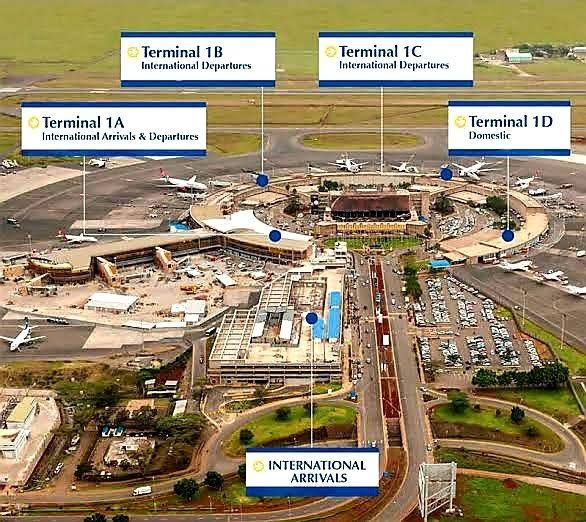
Recently, in the realm of aviation, the focus has been on a single company, Adani, and their proposed private initiative for one of Africa’s premier aviation hubs, Jomo Kenyatta International Airport JKIA . Today, I will abstain from engaging in a debate about Adani, given that CS Transport Chirchir has confirmed the absence of any agreement between Kenya and Adani. I will choose to look at the bigger picture.
We must avoid any JKIA discussion from excluding our national carrier interests. Our national carrier, KQ, continues to be a highly attractive business proposition, with an average of over 120 flights landing and taking off across Kenya, handling between 250,000 and 300,000 passengers per month. Our national carrier is currently flying to close to 40 cities across Africa and is still growing. We have less than 3 airlines that do that in Africa. Our national carrier is akin to an anchor tenant at a mall.
Why am I dragging Kenya Airways into this matter?
In 1989, the African Union came up with the Yamasokrou agreement on matters of aviation, followed by SAATM, which was meant to liberalize the airspace purely for African carriers.
The Single African Air Transport Market (SAATM) is a flagship project of African Union Agenda 2063, an initiative of the African Union to create a single unified air transport market in Africa to advance the liberalisation of civil aviation in Africa and act as an impetus to the continent’s economic integration agenda. SAATM will ensure aviation plays a major role in connecting Africa, promoting its social, economic, and political integration, and boosting intra-Africa trade and tourism as a result. We created SAATM to accelerate the full implementation of the Yamoussoukro Decision.
IATA also fully supports this initiative, which will open up Africa’s skies and promote the value of aviation throughout the continent. Open air arrangements boost traffic, drive economies, and create jobs. In a study, IATA discovered that the opening of markets and increased connectivity in just 12 key African countries would result in the creation of an additional 155,000 jobs and an annual GDP of US$1.3 billion.
To date, 34 countries have signed up to the SAATM agreement, among them Benin, Botswana, Cote d’Ivoire, Egypt, Ethiopia, Equatorial Guinea, Gabon, Gambia, Ghana, Guinée, Kenya, Lesotho, Liberia, Nigeria, the Democratic Republic of the Congo, Rwanda, Sénégal, Sierra Leone, South Africa, Swaziland, Tchad, Togo, and Zimbabwe. These countries represent over 80% of the existing aviation market in Africa.
Then why is SAATM important?
SAATM is allowing African carriers unfettered access to all the 34 countries. Uganda and Tanzania, for example, have asked for more time to help them build their national carriers. Airline access is governed by freedom rights where non-African airlines are allowed into the main hub only, but SAATM is allowing African carriers to fly into 2nd or even 3rd cities, hence KQ is able to fly to Livingstone other than Harare in Zimbabwe. SAATM grants KQ permission to drop and pick passengers in Livingston while en route to Cape Town. Again, SAATM grants KQ permission to connect Accra in Ghana and Dakar in Senegal. Such privileges are not and will not be available to non-African airlines, making KQ a prime candidate if we actively seek a strategic partner.
Proposal and way forward:
✅️1. Attach JKIA to a KQ deal, and the only firms that can do so are well-established airlines backed by their states, which also have thriving hubs. Getting a firm just to come in for JKIA is not a holistic approach. We have bailed out KQ many times, and the best way to get them to be on their own is to bring in strategic investors who will then tap into SAATM. These airlines and states will not tolerate any corrupt undertaking .
✅️2. It is precisely because of SAATM that Rwanda formed a partnership with Qatar, who purchased shares in both Rwanda and the new airport in Bugesera. Qatar is visionary; it wants to tap into SAATM.
✅️3. We have the likes of Singapore Airlines with Changi Airport, Emirates with Dubai, Etihad with Abu Dhabi, and even Saudi with Riyadh. Saudi Arabia under young Crown Prince Salman is hungry to grow their airline. Imagine once making a proposal to these well-run airlines and states to buy equity in KQ and make JKIA their hub in Africa. Africa is the most underserved continent hence Kenya with our God given location and well established airline with qualified staff we will attract many serious players.
When they buy equity it means that KQ will then be able to get bullish and buy new aircrafts that will help them compete effectively. We need wide bodied fleets and equally we need to grow our KQ cargo arm which again many successful Non African airlines are salivating for such an opportunity.
✅️4. We should then contemplate the long-term relocation of JKIA’s international flights to Konza. The current JKIA could then serve regional and domestic flights, much like JFK and LA Gaurdia in New York or Heathrow and Gatwick in London. We can then transform Wilson into a premier aviation school hub and an aviation research station.
✅️5. During the ongoing heated debate about JKIA & Adani, I believe we are overlooking the larger picture, which includes SAATM and our national carrier. Non-African airlines eager to serve Africa would consider a KQ & JKIA partnership a golden opportunity.
Based on the aforementioned, any organization solely focused on JKIA or KQ will not assist us in catching up or effectively competing with countries such as Ethiopia or Rwanda.
As always, I choose to remain an optimist that we will choose the right wall to place our ladder. We should not waste our time with a firm that only talks about terminals and a few airport hotels here and there. We should Think BIG; we need Big Audious Hairy Goals (BHAG). Our athletes think BIG in breaking world records why do we shy off from the same in making Kenya a better place
God bless Kenya , God Bless Africa
Mohammed Hersi
Mombasa


 Mohammed Hersi . A hotelier passionate about Tourism & Governance in Africa
Leave a reply to John MM Cancel reply